The Debrief Questions We Ask After Every Event (and What October Taught Us)
The event ends, the units are packed, and everyone wants to go home. That's exactly when the most useful hour happens. Our event debrief questions are short and a little uncomfortable on purpose, because "it went well" doesn't help the next event. This post shares the questions we use, the themes this month's guides kept coming back to, and what to watch before November gets busy.
Quick answer: Within a day or two, get the people who ran each station in one room. Ask what went to plan, what didn't, why, and what you'll change. Write down owners and deadlines. Focus on process, not blame, and keep the notes where next event's team will find them.
Table of Contents
The event debrief questions we ask after every event
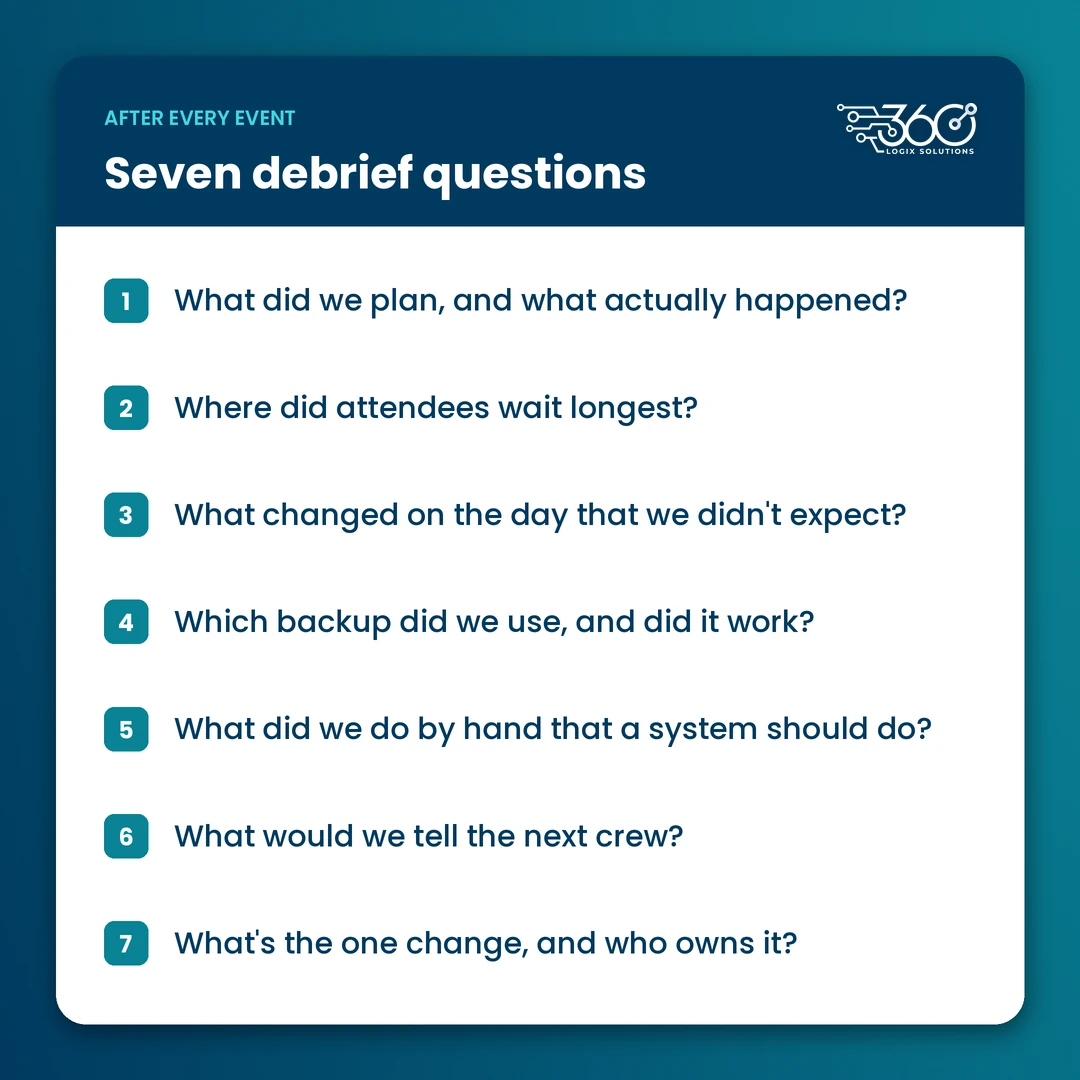
We keep our event debrief questions short so people answer them honestly:
- What did we plan to happen, and what actually happened? Start with facts, not feelings.
- Where did attendees wait longest? Registration, kit pickup, elevators, the buffet. Lines tell you where flow broke.
- What changed on the day that we didn't expect? Late slides, a moved session, a power issue, a delayed load-in.
- Which backup did we use, and did it work? If you never touched the backup, check it still exists.
- What did we do by hand that a system should have done? Manual counts and retyped lists are warnings.
- What would we tell the next crew before they start? One sentence each.
- What's the one change we'll make, and who owns it? No owner means no change.
How we run an event post mortem
An event post mortem sounds dramatic. Ours is a short meeting with a whiteboard.
| Part | What we do |
|---|---|
| When | Within a day or two, while details are fresh |
| Who | One person from each station: registration, screens, sound, creatives, stream, plus the client lead if they're willing |
| How long | Short. If it runs long, the agenda was too wide |
| Output | A short list of changes, each with an owner and a date |
| Where it lives | Next to the run sheet template, so the next project starts with it |
Two habits make it work. First, talk about the process, never the person. "The badge printer queue had no second lane" fixes something. "Someone was slow" fixes nothing. Second, read the last debrief's list before the next event's kickoff. Event lessons learned only count if somebody reads them again.
What October's guides kept coming back to
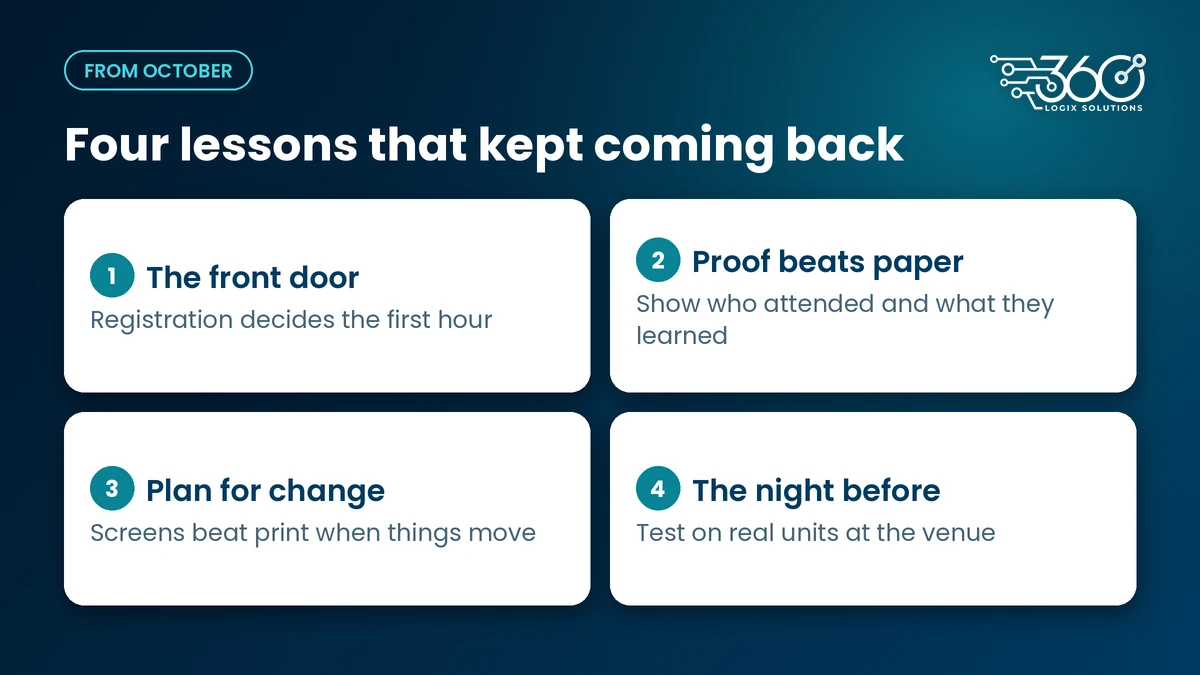
We published a guide almost every day this month. Reading them back, the same lessons showed up again and again, and none of them were about gadgets:
- Most problems start at the front door. Registration and check-in decide how the first hour feels. Our guide to registration area layout for 500+ attendees covers separate lanes, one-way flow and staffing by role.
- Proof beats paper. Boards and regulators want to see who attended and what they learned. If you're running a medical or professional event in November, CPD attendance tracking without the paperwork is worth a reread.
- Content changes, so plan for change. Screens beat print when schedules and sponsor slides move.
- The night before is the real show. Testing on real units at the venue catches problems a meeting room never will.
The rest of the month's guides, on screens, budgets, event apps and run sheets, are on all posts on the 360 Logix blog.
Common event planning mistakes to avoid in November and December
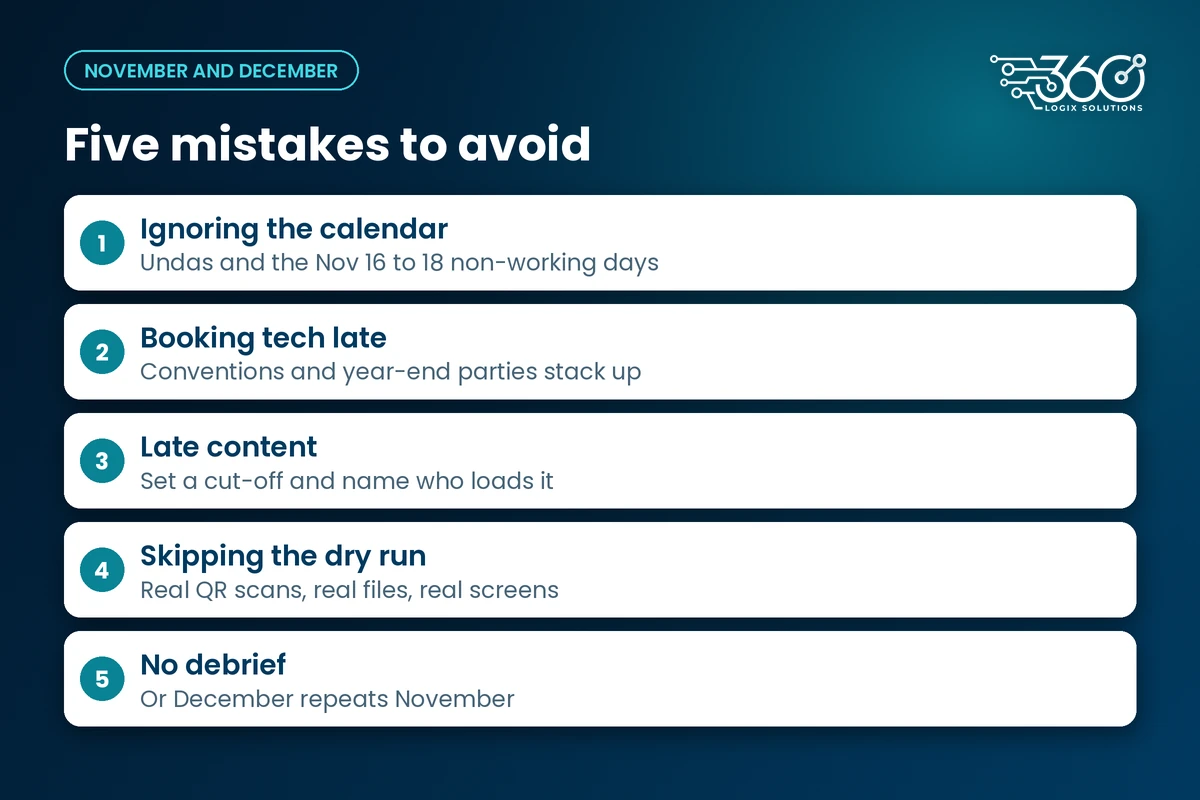
November is busy in Metro Manila, and December is party season. Here's what we'd avoid:
- Ignoring the calendar. Nov 1 and 2 are special non-working days for Undas. Nov 16 to 18 have been declared special non-working days in Metro Manila, which affects traffic, venue access and crew planning that week. Recheck the details closer to the dates.
- Booking tech late. Several medical society conventions fall in the second half of November, and year-end parties stack up in December. Equipment and crews get booked out.
- Late content. A slide deck that arrives at midnight is a risk, not a favor. Set a cut-off and name who loads it.
- Skipping the dry run. Scan a test QR and play the real files on the real screens before doors open.
- No debrief. If you skip it after a busy November, December repeats the same mistakes.
FAQ
What is an event post mortem?
It's a short review after an event where the team compares what was planned with what happened, finds the causes of problems, and agrees on changes. It's the same thing as a debrief. The goal is better process next time, not blame.
Who should attend an event debrief?
One person from each area that ran on the day: registration, screens and sound, creatives, streaming, and the organizer's lead. Keep it small enough that everyone speaks. Bring in suppliers if their part affected attendees.
When should you hold an event debrief?
Within a day or two, while details are fresh and before the team moves on. Waiting a week usually means vaguer answers and forgotten fixes.
Planning a busy November or December?
We've run event tech for 15+ years, and good event debrief questions are how each event teaches the next one. Book a call with our team and bring your dates, venue and attendee count. We'll tell you honestly what to book now and what can wait.
Related Articles
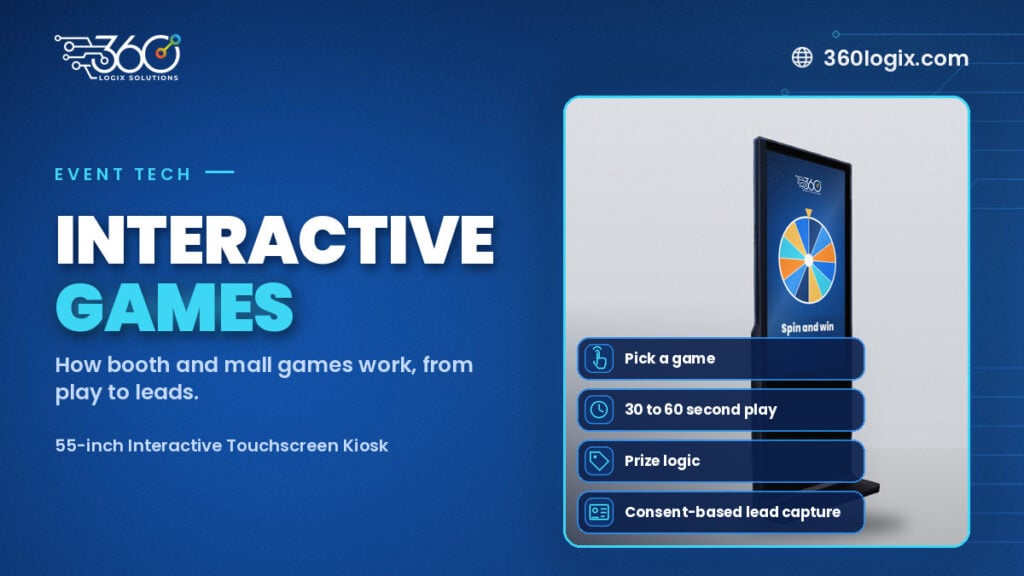
Interactive Games for Brand Activation: How They Work
How interactive games for brand activation work at booths and malls: the game picker, 30 to 60 second play, prize logic, consent-based lead capture and setup.
Post-Event Survey Questions: Collecting Attendee Feedback People Actually Fill Out
Three to five post-event survey questions, asked at the right moment, beat a 30-question form. Timing, a question bank, and how to raise response rates.
How Medical Associations Can Boost Post-Event Engagement
A 7/30/90-day post-event engagement plan for medical associations: fast certificates, recordings, member content, and support for PRC CPD documentation.