How to Reduce Registration Lines at a Medical Convention
It's early October, and if your society has a November convention, registration is already open or about to be. With convention season in full swing, the morning queue is fresh in everyone's mind. Here's the stance that matters for how to reduce registration lines: the line is usually built weeks before anyone arrives at the door.
Quick answer: Most long registration lines come from incomplete pre-registration data, one mixed queue, unpaid delegates at the counter, slow kit handoff and unbriefed staff. Fix the form, sort people into lanes and settle payments before the day. Adding more counters on the morning only treats the symptom.
Table of Contents
Why registration lines form at medical conventions
Medical conventions ask for more at the door than a typical corporate summit. Delegates need PRC license numbers, specialty, membership status and sometimes CPD tracking. When any of that is missing or wrong, the counter stops.
Mix paid and unpaid people in the same line, and every payment check holds up the doctor who already paid online. Add badge printing and kit packing at the same desk, and each person takes longer than they should. By 7:30 AM the queue looks like a capacity problem. It's usually a process problem that started when the registration form went live.
How to reduce registration lines: 5 causes and fixes
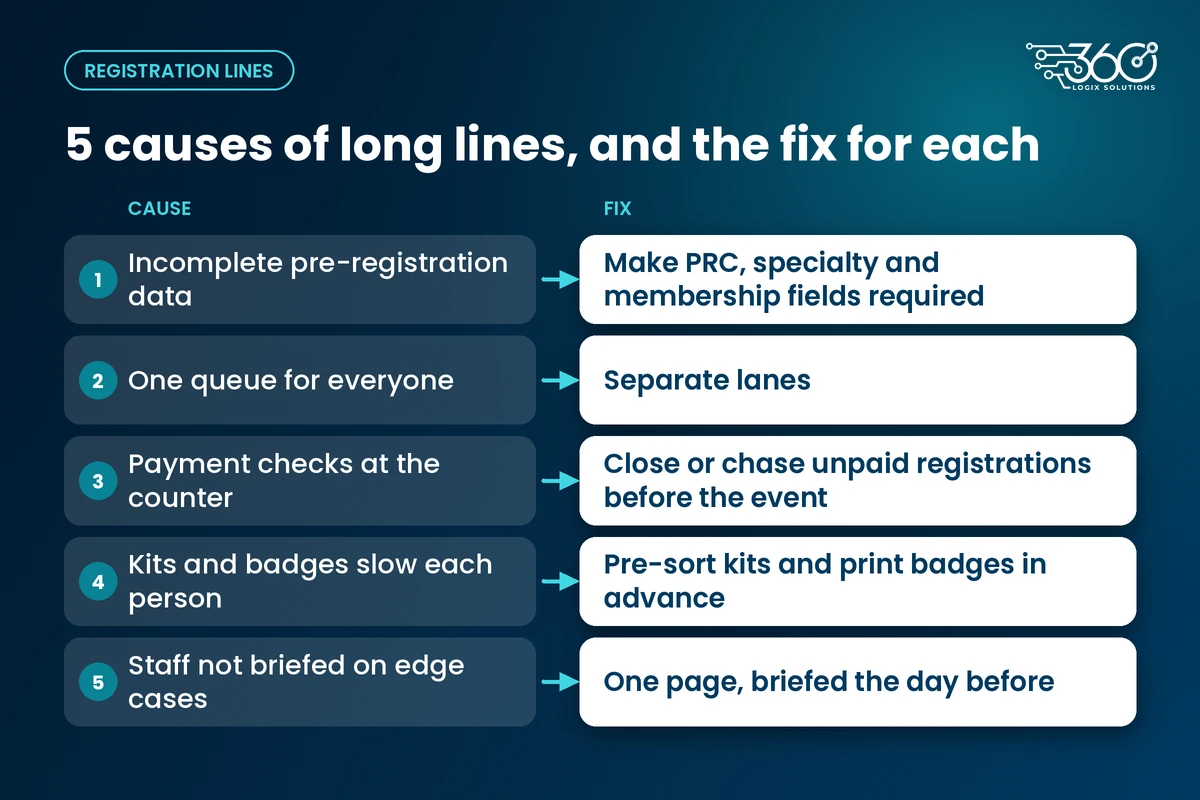
1. Incomplete pre-registration data
If PRC numbers, specialty and membership status aren't required online, staff will ask for them at the counter. That turns a quick check-in into a mini interview.
Fix: Make those fields required on the form. Confirm each registration by email with a QR code so the delegate arrives ready. An online event registration with QR confirmation setup is built for that: collect the details once, confirm them before the day and keep the counter for exceptions only.
2. One queue for everyone
Pre-registered paid delegates, walk-ins, unpaid renewals and people with name problems all waiting in the same snake is the fastest way to make a short line feel endless.
Fix: Separate lanes. At minimum: pre-registered check-in, walk-in/payment and a help desk for edge cases. Keep the layout simple for now; the full registration-area plan is a later post. On the day, QR code check-in at the door lets pre-registered delegates move through without a clipboard hunt.
3. Payment checks at the counter
Verifying bank transfers, sponsor-covered seats and late renewals at the registration table is slow and awkward under pressure.
Fix: Close or chase unpaid registrations before the event. Handle walk-in payments at a separate desk so paid delegates aren't blocked by someone sorting a receipt.
4. Kits and badges slow each person
If every kit is assembled while the delegate waits, or every badge is printed from a cold start, the line grows even when the form was perfect.
Fix: Pre-sort kits by registration type or alphabetical batch. Print badges in advance where you can, and keep on-site printing for corrections only. Badge workflow deserves its own write-up later; for this week, the goal is "hand over, don't assemble."
5. Staff not briefed on edge cases
Sponsored seats, name changes, dual-society members and "my QR won't open" are normal at medical conventions. If volunteers don't know the rule, every exception becomes a conference with the organizer.
Fix: One page. List the five most common problems, who decides, and what the delegate leaves with. Brief the team the day before, not at 6:45 AM.
What does a good event registration process look like?
A clean conference registration process is four steps, not a morning scramble:
- Register online — required fields for PRC, specialty, membership and payment status
- Confirm — email with QR (and a clear note if anything is still unpaid)
- Check in — scan or look up, then route walk-ins and problems elsewhere
- Kit — pre-sorted handoff, not packing on the spot
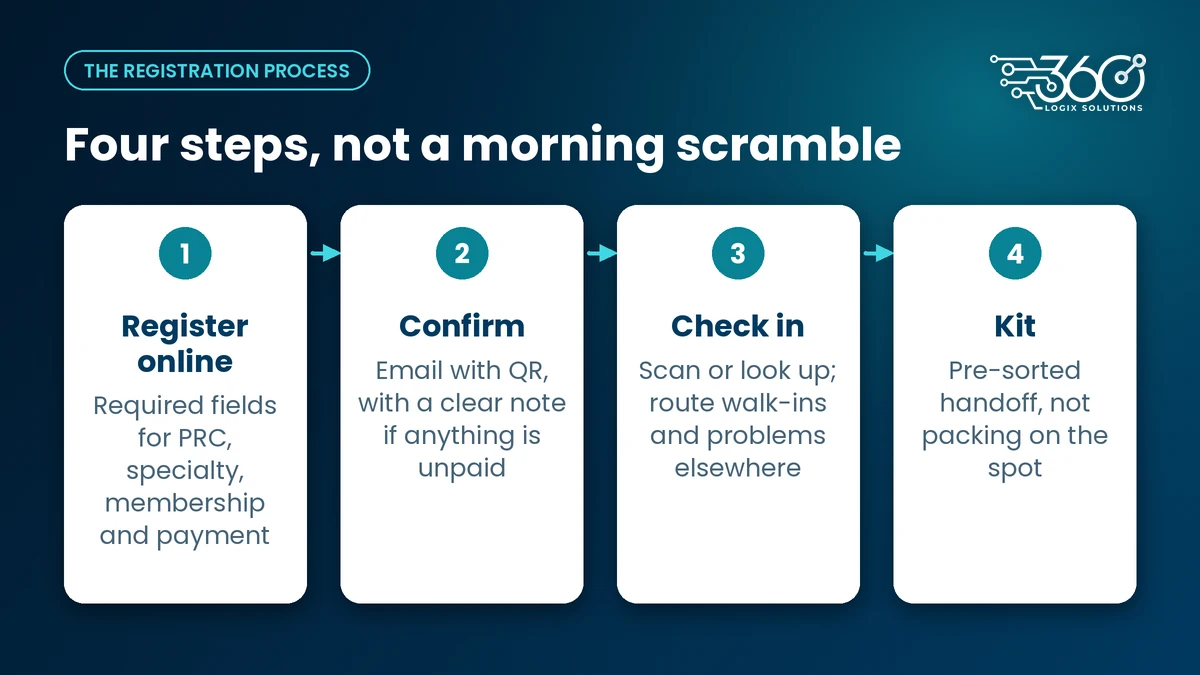
Those are the event registration best practices that actually shorten lines. Fancy hardware helps only after the data and the lanes are sorted.
Peak arrivals: plan for the morning rush, not total headcount
Organizers often ask how many check-in stations they need based on total attendees. That number is less useful than it sounds. Arrivals usually bunch up soon after doors open, then thin out to a trickle.
Plan stations and lanes for that peak window, not for the full-day average. Walk the floor plan: where do people enter, where do they wait without blocking the lobby, and which lane can absorb the spike without stealing staff from the help desk. If you only scale for total headcount, you'll still get a bottleneck at 7:30 AM.
What to fix this week if your convention is next month
Use this as a short checklist:
- [ ] Required fields for PRC number, specialty and membership status are on the live form
- [ ] Confirmation emails with QR are going out (and unpaid statuses are visible)
- [ ] Payment chase list is owned by someone, with a cutoff before event day
- [ ] Lane plan drafted: pre-registered, walk-in/payment, help desk
- [ ] Kits assigned to batches; badge print plan agreed
- [ ] One-page edge-case cheat sheet drafted for staff briefing
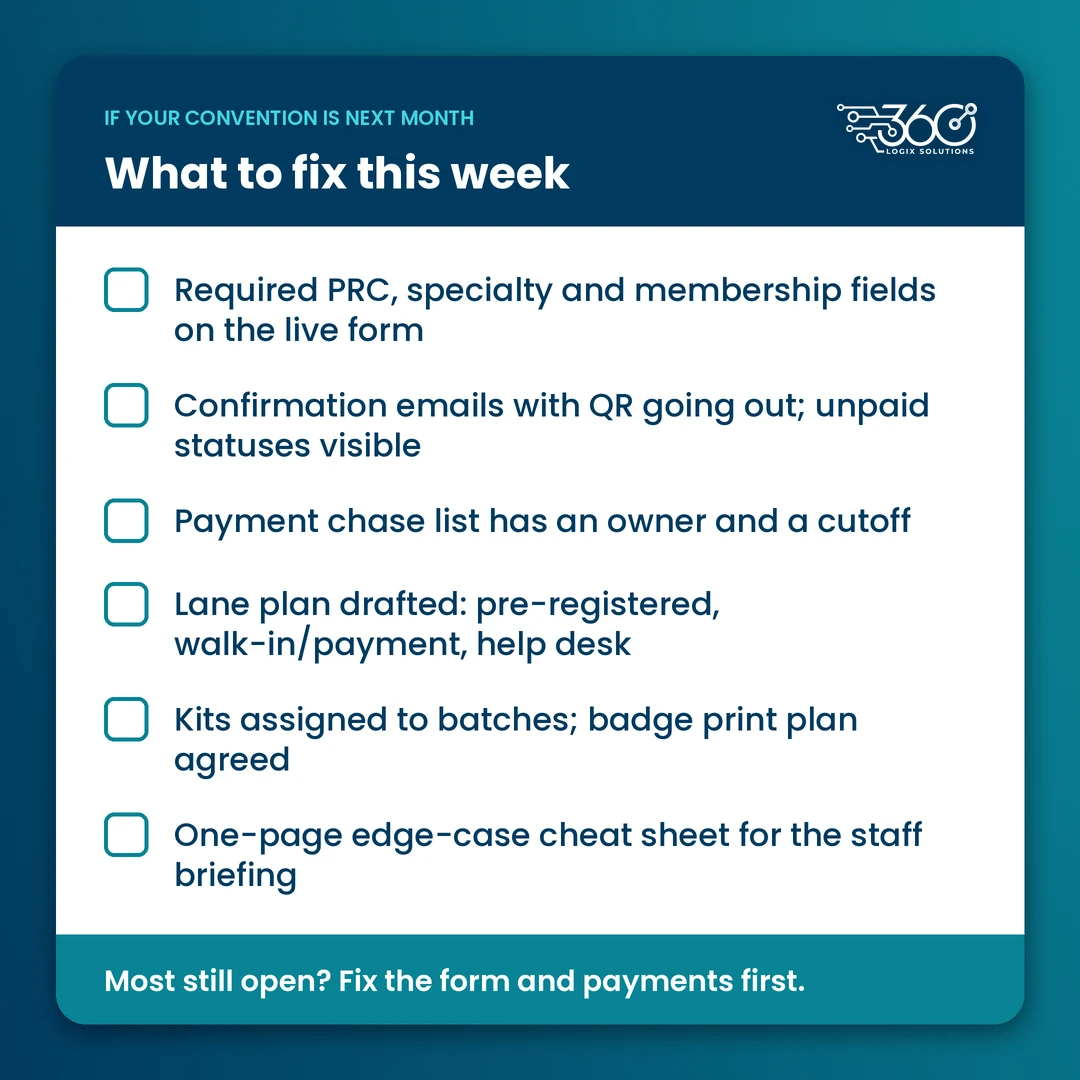
If most of those are still open, fix the form and payments first. Extra counters won't save a broken signup flow.
FAQ
How early should registration open on convention day?
Early enough that the peak window finishes before the first plenary, with time for walk-ins and problems. Exact open times depend on your program and venue rules, so set them with the scientific committee, not by copying another event's schedule.
Should walk-ins have a separate desk?
Yes. Walk-ins and unpaid renewals need payment and data capture. Keeping them out of the pre-registered lane is one of the simplest ways to protect the people who did everything right online.
Can delegates check in with a QR code?
Yes, when registration collected complete data and sent a confirmed QR. The code only speeds things up if the record behind it is already clean.
What details should we collect before the event?
At minimum: full name as it should appear on the badge, PRC license number where relevant, specialty, membership or registration category, payment status and a working email for confirmation. Add consent language for personal data before you collect anything extra.
Planning November registration?
We've supported event registration for 15+ years, and the pattern is consistent: clean data and sorted lanes beat last-minute manpower. Talk to us about your convention registration and we'll walk through your form, lanes and check-in plan before the morning rush finds the gaps for you.
Related Articles

LED Poster vs Tarpaulin: What Actually Works Better for Your Next Event
LED poster vs tarpaulin: which fits your next event? A practical guide to cost, last-minute changes, sponsor content and when a printed tarp makes sense.
Planning Your Year-End Corporate Event: A Simple Year-End Party Checklist
A simple year-end party checklist for Philippine companies: what to book and when, from date and venue to program, food and tech, plus a day-of list.

5 Ways to Use a Digital Standee for Events with a 55-Inch Stand Kiosk
Five ways to use a digital standee for events: welcome, live program, sponsor loops, photo slideshows and raffle countdowns.