Hyper-Reality Marketing: Why AR Takes Over Tech Events
The Shift We've All Been Waiting For
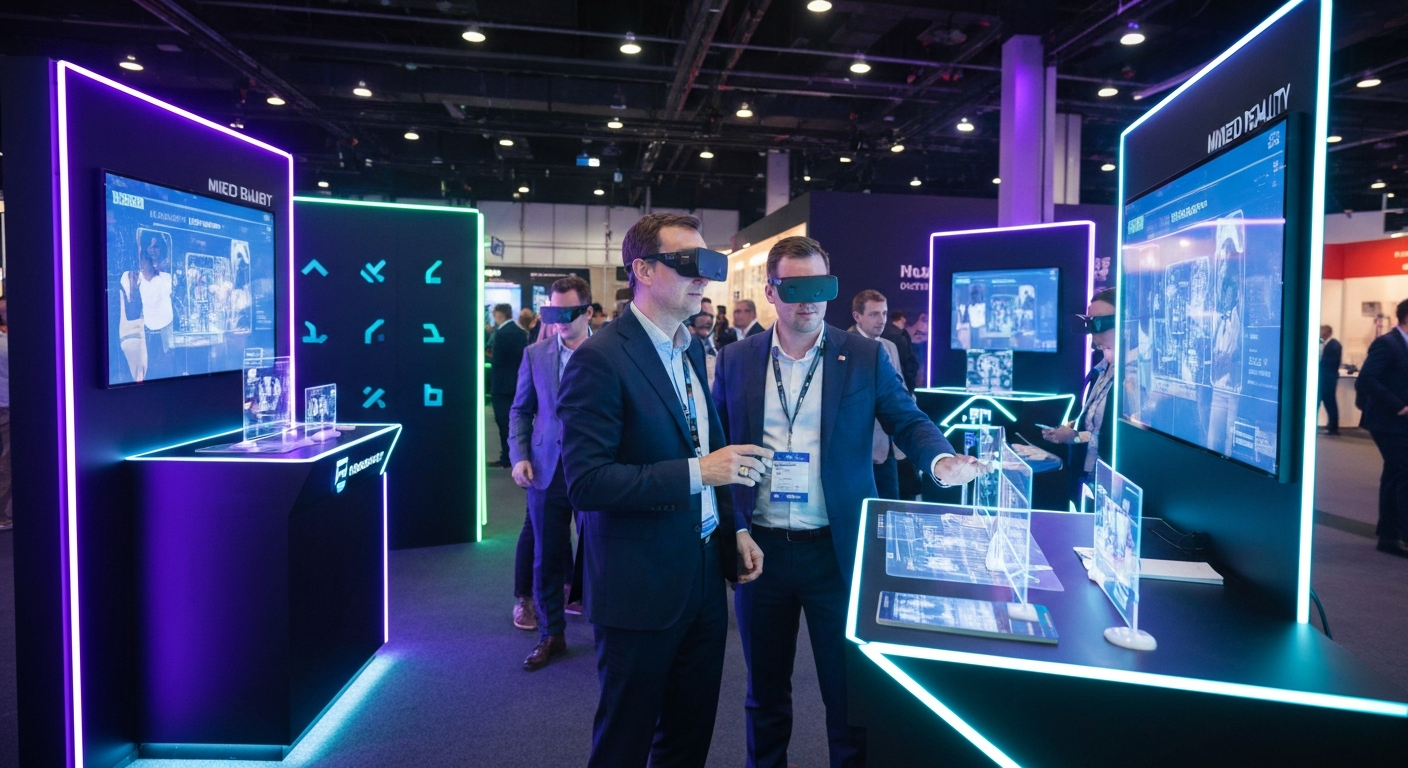
Let's be completely honest for a second. If you went to a tech conference anytime between 2018 and 2023, you probably saw the same sad VR setup. A small booth in the corner, a tangled mess of wires, and some poor attendee flailing their arms around while everyone else awkwardly tried not to stare. It was a gimmick. We all knew it was a gimmick. But walking the floor at the major technology events this year, something feels fundamentally different. The gimmick era is officially dead.
What we're seeing today is the dawn of what I like to call "Hyper-Reality Marketing." The hardware has finally caught up with the ambition. The glasses are sleek—they actually look like something you'd wear in public—and the integration between the physical event space and the digital marketing layer is completely seamless. It's no longer about escaping the room; it's about making the room infinitely more interesting.
Why Marketers Are Obsessed with Mixed Reality
If you're in digital marketing, your entire job revolves around capturing and holding attention. And let me tell you, nothing captures attention quite like walking past an empty stage and suddenly seeing a full-scale, interactive 3D model of a new product assemble itself right in front of your eyes. It's absolute magic.
But the real reason CMOs are throwing budget at this isn't just because it looks cool. It's because of the data. When an attendee interacts with an AR activation, they aren't just passively watching a video. They are leaning in, manipulating objects, and spending real time with the brand. The dwell times we're seeing on these activations are absolutely off the charts. We're talking minutes of uninterrupted engagement, which in the digital marketing world, might as well be a lifetime.
The End of the Boring Swag Bag
Remember when the highlight of a trade show was getting a free branded power bank or a slightly uncomfortable t-shirt? Those days are fading fast. Brands are realizing that physical swag usually ends up in a hotel trash can. Instead, they are offering digital exclusivity. We're seeing brand activations where scanning a QR code with your AR glasses unlocks a hidden VIP lounge area in the venue, or gives you a persistent digital companion that guides you through the event schedule.
It turns the entire conference into a scavenger hunt. Attendees are actively seeking out brand interactions instead of actively avoiding them. That's a massive psychological shift.
The Cost of Entry is Dropping, But The Stakes Are High
A few years ago, developing a custom AR experience for a single three-day conference would absolutely destroy your quarterly marketing budget. You needed specialized developers, expensive hardware rentals, and a massive amount of lead time. It was a playground exclusively for the Fortune 500. Today? The landscape is completely different.
We now have access to incredible no-code and low-code platforms that allow creative teams to spin up highly engaging spatial experiences in a matter of weeks, not months. The democratization of these creation tools means that mid-market B2B companies can now punch way above their weight class on the trade show floor. You don't need a million-dollar budget to make a lasting impression; you just need a genuinely clever idea and the willingness to execute it well.
However, because the barrier to entry has lowered, the baseline expectation from attendees has skyrocketed. You can't just slap a floating logo over your booth and call it a day. That's the modern equivalent of handing out a branded pen. The experience has to be native to the medium. It needs to provide real utility or profound entertainment. If your AR activation doesn't help the attendee understand your complex software architecture better, or doesn't make them laugh out loud, it's just digital clutter.
Integrating with the Broader Marketing Ecosystem
The most successful campaigns I've seen this year don't treat the live event as a standalone silo. The event is simply the climax of a much longer narrative arc. Imagine this: three weeks before the conference, your target accounts receive a direct mail piece—a simple, elegantly designed card. When they scan it with their phone, an AR invitation pops up, giving them a personalized teaser of what you'll be unveiling at the show.
When they finally arrive at your booth, the system recognizes them (via their opt-in smart registration badge) and the physical space adapts to their specific industry needs. The digital overlays they see are tailored to their company size and pain points. After they leave, the retargeting ads they see on LinkedIn aren't generic; they specifically reference the exact 3D model they interacted with at the event. This is what we mean when we talk about a frictionless omnichannel experience. It's incredibly difficult to pull off, but when it works, it feels like absolute magic to the buyer.
The Role of AI in Real-Time Adaptation
You can't talk about the future of event tech without bringing Artificial Intelligence into the mix. The real secret sauce of these new AR activations is the AI engine running quietly in the background. We are moving away from static, pre-rendered experiences into dynamic, generative content.
Let's say a prospect is interacting with a virtual representation of your supply chain software. The AI can analyze their real-time reactions—where they hesitate, what they zoom in on—and dynamically adjust the presentation on the fly. If they seem confused by the logistics module, the system can instantly simplify the visual data and offer a helpful audio prompt. It's like having a top-tier sales engineer personally guiding every single attendee through your product, simultaneously, without ever getting tired.
This level of dynamic content generation is what separates the decent booths from the unforgettable ones. It ensures that no two attendees have the exact same experience, because the experience is literally molding itself to fit the user.
The Analytics of Where You Look
This is where things get slightly futuristic (and incredibly valuable for marketers). The new generation of AR wearables doesn't just track what you click; it tracks what you look at. Eye-tracking technology has gotten so good that brands can now generate heat maps of physical booths based entirely on attendee gaze.
Imagine knowing exactly which part of your physical display caught the most attention, down to the millimeter, without ever having to ask a single survey question. Did they look at the pricing tier? Did their eyes linger on the new feature list? When you combine this spatial data with traditional analytics reporting, you get a 360-degree view of consumer intent that is basically unprecedented.
Breaking Down the Silos Between Physical and Digital
For the longest time, event marketing and digital marketing lived in two completely different silos. The event team handled the booth, the lanyards, and the catering. The digital team handled the follow-up emails and the retargeting ads. They rarely spoke the same language.
Hyper-reality marketing forces these teams to merge. An AR activation isn't just a physical build; it's a software deployment. The digital team needs to ensure the UI is flawless, the tracking pixels are firing correctly, and the CRM integration is seamless. When someone interacts with a virtual product at a booth, that action needs to immediately trigger a highly personalized email marketing sequence. If they spent five minutes looking at the enterprise tier of your software in AR, the follow-up email shouldn't be a generic "Thanks for stopping by!" It should be a direct link to book a demo with an enterprise sales rep.
The Accessibility Factor
One of the biggest criticisms of AR in the past was that it was exclusionary. Not everyone could afford the headset, and not everyone wanted to wear one. The game-changer has been WebAR. You don't need a dedicated headset to experience the magic anymore.
We're seeing massive LED walls acting as massive communal AR markers. Anyone with a smartphone—which is literally everyone at a tech event—can point their camera at the stage and watch the presentation come alive with extra layers of data, live translations, or interactive polls. It democratizes the experience. You can choose your level of immersion. Want the full experience? Put on the glasses. Just want a quick hit of interactivity? Use your phone.
Navigating the Privacy Minefield
Now, I can't talk about eye-tracking and spatial analytics without bringing up the elephant in the room: privacy. People are rightfully defensive about their data. If you're going to track where someone is looking, you better have explicit, rock-solid consent.
The brands doing this right are leaning heavily into transparency. They aren't hiding the tracking clauses in a 50-page terms of service agreement. They are making the value exchange incredibly clear: "Allow us to customize this digital experience for you, and we'll give you X." When the experience is actually valuable—not just a thinly veiled sales pitch—people are surprisingly willing to opt-in.
What This Means for Next Year
If you're planning your event strategy for the upcoming year, you need to be thinking spatially. A static booth with a looping video on a TV screen is no longer going to cut it. You are competing against brands that are literally bending reality to tell their story.
Start small if you have to. Introduce a WebAR element to your printed collateral. Gamify your booth check-in process. But start moving in this direction, because the intersection of live events and immersive digital marketing is only going to get more crowded. The brands that master this hybrid approach now are the ones that will completely dominate the conversation tomorrow.
And honestly? It's just a lot more fun to build. We're finally getting to play with the toys we were promised a decade ago, and the results are speaking for themselves. If you need help figuring out how to bring this kind of interactive tech to your next activation, our team at 360 Logix Solutions Inc. is already building the future. Let's talk.
Related Articles
Augmented reality is no longer just a gimmick for tech events. Discover how everyday brands are using AR to drive sales, reduce returns, and create unforgettable customer experiences.

Google shocked the marketing world by reversing its decision to kill third-party cookies. But relying on third-party data is still a losing strategy. Discover why first-party data remains your ultimate competitive advantage.

Being on every platform isn't enough. Discover the critical difference between multichannel and omnichannel marketing, and why integrated data is the key to scaling your business.
