Beyond the QR Code: How Smart Event Technology is Transforming Philippine Conferences
Smart event technology transforms conferences by shifting the focus from basic logistics to immersive attendee experiences. From instant smart registration to real-time analytics and interactive LED walls, modern tech integration drives engagement, eliminates bottlenecks, and provides actionable data for organizers and sponsors.

For years, Philippine event organizers considered themselves "tech-forward" if they emailed a QR code ticket instead of printing a physical one. We patted ourselves on the back for eliminating paper lists at the registration table. But as the landscape of corporate events, trade shows, and brand activations has matured, that basic level of digitization is no longer a competitive advantage—it is the bare minimum.
Attendees today are conditioned by frictionless digital experiences in their everyday lives. They expect the same level of seamlessness when they walk into a conference hall in BGC or a trade show in Pasay. When they encounter long lines, confusing layouts, or static, uninspiring stages, their perception of the event—and the brand hosting it—plummets before the first speaker even takes the microphone.
This is where smart event technology steps in. It is no longer just about logistics; it is about creating an experiential ecosystem that engages attendees, empowers organizers, and delivers measurable ROI for sponsors.
Key Takeaways
- QR codes are now the bare minimum; attendees expect seamless, multi-touchpoint digital experiences.
- Smart registration systems eliminate bottlenecks and set the tone for a premium event.
- Immersive technology like interactive LED walls drives engagement and sponsor value.
- Real-time event analytics allow organizers to pivot strategies on the fly.
The Shift from Logistical to Experiential Tech
Historically, event technology was deployed to solve headaches for the organizer: ticketing platforms to collect payments, scanners to count heads, and basic apps to host the agenda. The focus was entirely on operational efficiency.
Today, the paradigm has shifted. The most successful events leverage technology to enhance the attendee's journey. This means moving from passive participation to active engagement. It means using technology not just to get people in the door, but to keep them captivated once they are inside.
This transformation is being driven by a convergence of accessible hardware (like high-definition LED walls and smart scanners) and sophisticated software (like integrated event management platforms and real-time analytics dashboards).
Smart Registration: The First Impression That Counts
The registration desk is the frontline of your event. It is the first physical touchpoint an attendee has with your brand. If that experience involves standing in a slow-moving line while staff frantically search for their name on a printed spreadsheet, you have already lost momentum.
Smart registration systems transform this critical moment. Imagine an attendee walking up to a sleek, self-serve kiosk. They scan their digital ticket, a personalized welcome message appears on the screen, and their high-quality badge is printed instantly. The entire process takes less than ten seconds.
But the benefits extend far beyond speed. These systems provide organizers with a live dashboard of check-ins, allowing them to monitor attendance velocity and deploy staff dynamically. VIPs can trigger automatic SMS alerts to their designated handlers the moment they scan in. This level of white-glove service, powered by invisible technology, elevates the entire event profile.
Immersive Tech: LED Walls and Interactive Displays
Once attendees are inside, the visual environment dictates their level of engagement. Static banners and standard projector screens are easily ignored. To capture and hold attention in a world of constant distraction, events are turning to immersive visual technology.
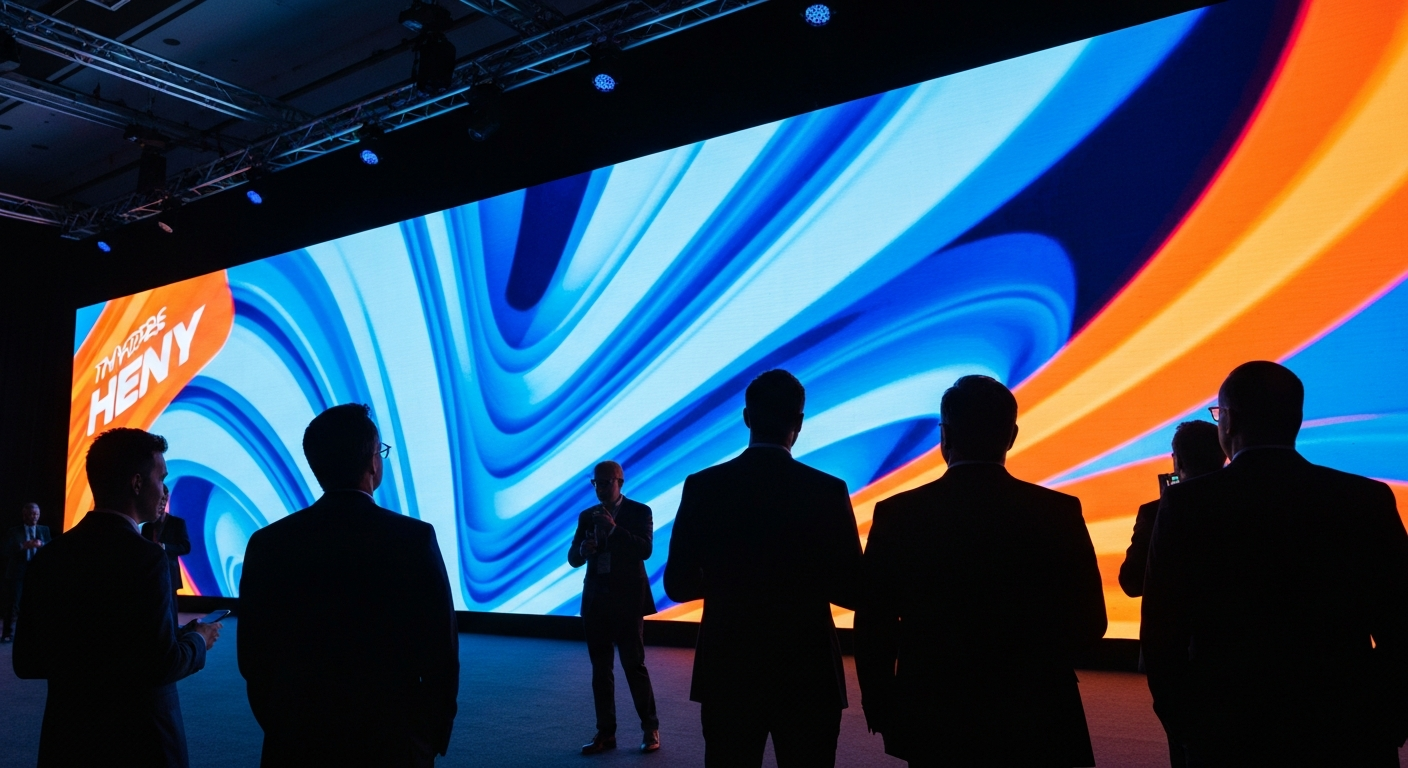
High-definition LED walls have become the centerpiece of modern stage design. They offer unparalleled brightness, contrast, and flexibility. But the real magic happens when these displays become interactive.
Imagine a product launch where the LED backdrop reacts to the presenter's movements, or a trade show booth featuring touch-enabled displays that allow attendees to explore a 3D model of a new product. By integrating live polling, social media walls, and real-time data visualizations, the screen transforms from a passive backdrop into an active participant in the event narrative.
Data-Driven Events: Real-Time Analytics
Perhaps the most significant advantage of modern event technology is the data it generates. In the past, evaluating an event's success relied on gut feeling and post-event surveys with low response rates. Today, organizers can measure engagement with surgical precision.
Smart scanners and RFID wristbands track attendee movement, revealing which sessions are the most popular and which sponsor booths are generating the most foot traffic. This data is not just valuable for post-event reporting; it is actionable in real-time.
If an organizer notices that a particular breakout room is overflowing while another is empty, they can send a push notification through the event app to redirect traffic. If a sponsor's booth is underperforming, the organizer can deploy a brand ambassador to drive engagement. This agility, powered by real-time analytics, ensures that both attendees and sponsors maximize their event experience.
The New Standard for Hybrid and Live Broadcasting
The demand for accessible content has made hybrid events and live broadcasting a permanent fixture. However, simply setting up a camera at the back of the room and streaming to Facebook Live is no longer sufficient.
Remote attendees expect a broadcast-quality experience. This requires professional audio systems, multi-camera setups, and dedicated streaming platforms that offer interactive features like live Q&A, virtual networking lounges, and downloadable resources.
By treating the virtual audience with the same level of care as the in-person audience, organizations can exponentially increase their reach and impact without compromising the quality of the experience.
Why Event Organizers Can No Longer Ignore Tech Integration
The integration of smart technology is not a luxury reserved for massive international summits; it is a necessity for any business event that wants to remain relevant. The cost of implementing these solutions has decreased significantly, making them accessible to small and medium-sized enterprises.
More importantly, the cost of not implementing them is steep. Events that fail to deliver a seamless, engaging, and data-driven experience will struggle to attract attendees, retain sponsors, and justify their budgets.
As we look toward the future of events in the Philippines, the organizers who thrive will be those who view technology not as a set of tools, but as the foundational architecture of the attendee experience.
If you are ready to elevate your next corporate event, product launch, or conference, the team at 360 Logix Solutions (through our EventsHub division) can help you design and deploy a complete technology ecosystem. From smart registration to immersive LED displays and live broadcasting, we build events that leave a lasting impression. Book a call with us via our contact page.
Written by the 360 Logix Solutions team.
Frequently Asked Questions
What is the difference between a standard check-in and a smart registration system?
Standard check-ins often rely on manual lists or basic scanning apps that only verify tickets. Smart registration integrates self-serve kiosks, instant badge printing, VIP alerts, and real-time attendance dashboards to eliminate lines and provide actionable data.
Are LED walls suitable for smaller indoor events?
Yes. Modern LED panels are modular, meaning they can be configured to fit almost any space. High-resolution panels (with a lower pixel pitch) look incredibly sharp even when attendees are standing just a few feet away, making them perfect for intimate corporate gatherings.
How do event analytics actually help sponsors?
Event analytics provide sponsors with concrete data on foot traffic, dwell time, and interaction rates at their booths. Instead of guessing their ROI based on the number of business cards collected, they receive detailed reports proving the exact level of engagement their investment generated.
Can I integrate my existing CRM with your event registration tech?
In most cases, yes. Professional event registration platforms offer APIs or direct integrations that allow attendee data to flow seamlessly into your CRM (such as 360 Connect), ensuring that your sales team can follow up with leads immediately after the event.
{
  "@context": "https://schema.org",
  "@type": "FAQPage",
  "mainEntity": [{
    "@type": "Question",
    "name": "What is the difference between a standard check-in and a smart registration system?",
    "acceptedAnswer": {
      "@type": "Answer",
      "text": "Standard check-ins often rely on manual lists or basic scanning apps that only verify tickets. Smart registration integrates self-serve kiosks, instant badge printing, VIP alerts, and real-time attendance dashboards to eliminate lines and provide actionable data."
    }
  }, {
    "@type": "Question",
    "name": "Are LED walls suitable for smaller indoor events?",
    "acceptedAnswer": {
      "@type": "Answer",
      "text": "Yes. Modern LED panels are modular, meaning they can be configured to fit almost any space. High-resolution panels look incredibly sharp even when attendees are standing just a few feet away, making them perfect for intimate corporate gatherings."
    }
  }, {
    "@type": "Question",
    "name": "How do event analytics actually help sponsors?",
    "acceptedAnswer": {
      "@type": "Answer",
      "text": "Event analytics provide sponsors with concrete data on foot traffic, dwell time, and interaction rates at their booths. Instead of guessing their ROI based on the number of business cards collected, they receive detailed reports proving the exact level of engagement their investment generated."
    }
  }, {
    "@type": "Question",
    "name": "Can I integrate my existing CRM with your event registration tech?",
    "acceptedAnswer": {
      "@type": "Answer",
      "text": "In most cases, yes. Professional event registration platforms offer APIs or direct integrations that allow attendee data to flow seamlessly into your CRM (such as 360 Connect), ensuring that your sales team can follow up with leads immediately after the event."
    }
  }]
}Related Articles

Being on every platform isn't enough. Discover the critical difference between multichannel and omnichannel marketing, and why integrated data is the key to scaling your business.

Discover why referral marketing is the most cost-effective way to grow your small business, and learn how to build a system that turns your best customers into your loudest advocates.

Discover why consistency in social media posting beats going viral. Learn a sustainable social media strategy for small business Philippines and book a call.
