Interactive Games for Brand Activation: How They Work
A booth with a screen gets a glance. A booth with a game gets a line. That's the simple reason brands keep asking us about interactive games for brand activation: people stop, play, and leave with a reason to remember you. But the fun part on the screen only works when the boring parts behind it are planned, from prize stock to consent wording. Here's how these games actually run on the day.
Quick answer: A touchscreen kiosk or tablet shows a game picker (spin the wheel, quiz, find-the-item, pick-your-favorite). Each round takes 30 to 60 seconds. The game decides prizes from a stock you control, asks for details only with clear consent, mirrors play on a bigger screen to draw a crowd, and logs every play.
Table of Contents
How interactive games for brand activation work at a booth
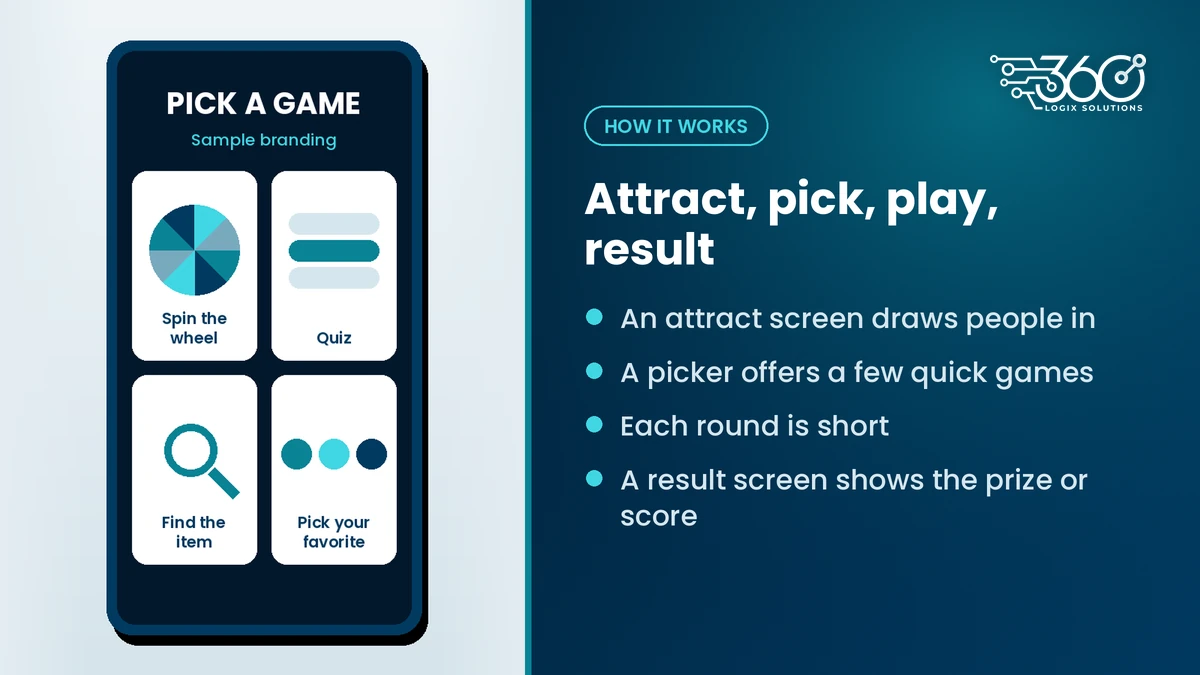
Most of the games we see at booth and mall activations follow the same flow, whatever the theme.
1. The attract screen
When nobody's playing, the screen loops a short, bright "Tap to play" animation. This is the bit that catches people walking past, so it needs big type, movement and the prize visible.
2. The game picker
Tap in and the player sees a picker screen with two to four game tiles. Common types:
- Spin the wheel: the classic. One tap, a satisfying spin, a result. Quick to understand from across the aisle.
- Quiz: three to five multiple-choice questions about the product or the brand's message. Good when you want people to actually learn something.
- Find-the-item: spot the product or logo hidden in a busy scene before the timer runs out.
- Pick-your-favorite: choose a flavor, variant or design. It doubles as a light poll, so you learn what people like while they play.
Offering a choice makes people feel in control, and it lets the brand team see which game pulls the most plays.
3. Short play time
Keep each round to 30 to 60 seconds. Longer than that and the line behind the player gets restless, and the people watching drift off. A short round also means more players per hour on one kiosk.
4. The result screen
Win or not, the player gets a clear result, a short brand message, and instructions for claiming a prize. "Show this screen at the prize desk" works better than making them hunt for a staff member.
Prize logic and lead capture, with consent
This is where games either run smoothly all day or run out of prizes by lunch.
Prize logic
You decide the rules, the game follows them. Things to settle before launch:
| Decision | Why it matters |
|---|---|
| Total prize stock per day | The game shouldn't award prizes you don't have on the table |
| How wins are spread through the day | So the evening crowd still has a chance, not just the first hour |
| Everyone-wins vs chance-based | A small token for everyone keeps the mood up; a few bigger prizes add excitement |
| One play per person, or more | Stops one enthusiastic kid from emptying the prize box |
| How a prize is claimed | Claim code, screen photo or QR, checked at the prize desk |
If prizes are awarded by chance as part of a sales promotion, check with your legal or compliance team whether the promo needs a permit before you launch.
Lead or data capture
Many brands want something back from each play, like a name, mobile number or email. That's fair, as long as it's done properly under the Data Privacy Act:
- Ask only for what you'll use. If you won't follow up by email, don't ask for an email.
- Make consent clear and separate. One unticked box to join the game, a separate unticked box for marketing messages. Never pre-tick.
- Show a short privacy notice on screen: who's collecting, what for, how long it's kept.
- Let people play without signing up when you can. You'll get fewer leads but better ones, and nobody walks away annoyed.
- Think about minors. Mall crowds include kids. Skip data capture for them or ask for a parent's consent.
Branding the screens and choosing the hardware
Branding
Every screen is brand space: attract loop, picker, game, result. Use the brand's colors, fonts and tone throughout, and keep text short enough to read in a second or two. Our creatives build these screens to match the booth design so the game doesn't look like a generic app dropped onto a kiosk. See how we approach brand activation for the wider booth.
Hardware
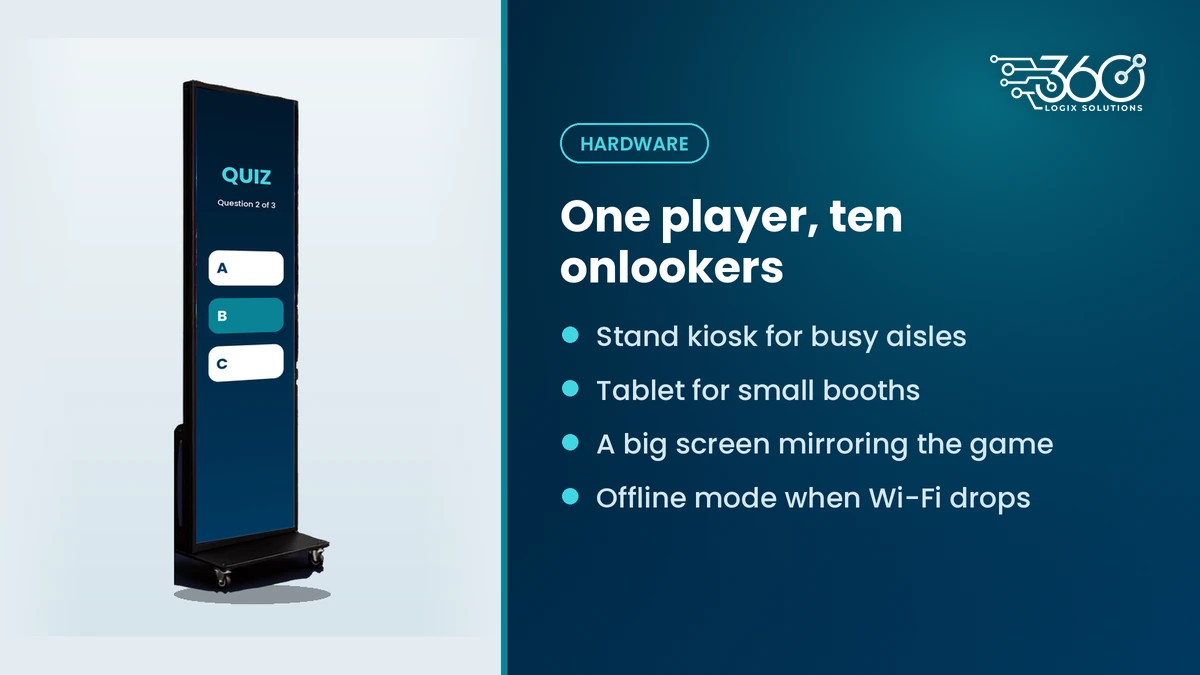
- Touchscreen kiosk: a tall interactive touchscreen kiosk is the most visible option and easy for adults to reach. Good for busy aisles.
- Tablet on a stand: cheaper and compact, fine for smaller booths or a counter. Less visible from a distance.
- Mirror screen: a bigger screen, like an LED Poster or display, mirroring the game so the crowd can watch each spin. This is what turns one player into ten onlookers. Our LED Posters and displays are often paired with a kiosk this way.
- Offline mode: venue and mall Wi-Fi can be unreliable when crowds peak. The game should keep running and store plays locally, then sync later.
- Power and cable management: booths are tight. Plan where the outlets are and keep cables away from where players stand.
Staffing and measuring plays
Staffing
A game doesn't run itself. For a typical booth we'd plan for:
- A host or promoter who invites people in, explains the game in one sentence and keeps the line moving
- A prize desk person who checks claim codes and hands out prizes
- A technician on call for screen, power or connection hiccups, especially on day one
Brief everyone on the same script, the prize rules and what to say when someone asks what happens to their data.
Measuring plays
The game logs give you numbers you can actually report, instead of a guess from a photo:
- Total plays, and plays per hour (so you can see peak times)
- Which game on the picker got chosen most
- Completion rate (how many people finished a round)
- Opt-in rate for data capture, kept separate from marketing opt-ins
- Prizes claimed vs prizes awarded
- Answers to pick-your-favorite or quiz questions, as light market feedback
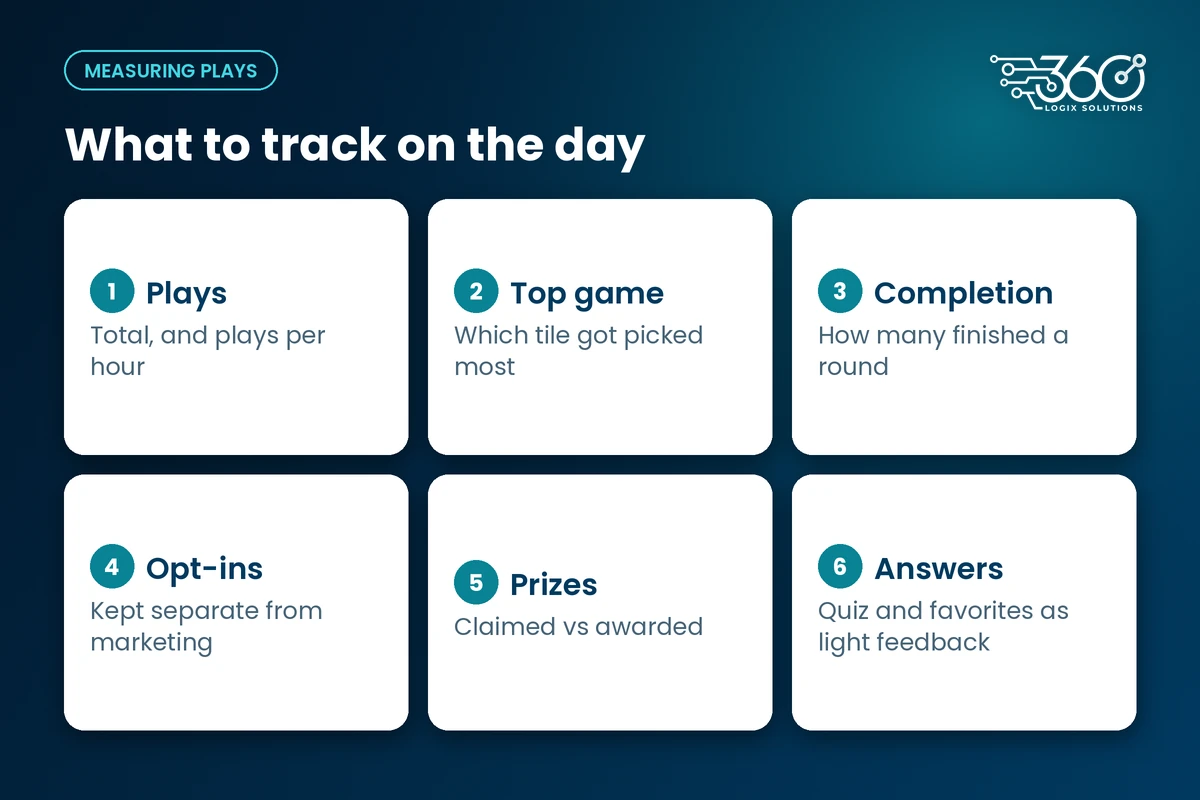
Agree on what you'll measure before the activation starts, so the brand team gets a clean end-of-day summary instead of a spreadsheet nobody asked for.
FAQ
How long should a brand activation game take to play?
Aim for 30 to 60 seconds a round. That keeps the line moving, holds the attention of people watching, and lets one kiosk handle more players over the day. Quizzes can sit at the longer end; spin the wheel can be over in seconds.
Do interactive booth games need internet?
They shouldn't depend on it. Venue and mall Wi-Fi often slows down when crowds peak. A good setup runs offline, stores plays and opt-ins on the device, and syncs when the connection is stable or after the event.
Can we collect customer details through the game?
Yes, with clear, separate consent and a short privacy notice on screen. Ask only for what you'll use, don't pre-tick boxes, keep marketing opt-in separate from joining the game, and be careful with minors.
Is a tablet enough, or do we need a kiosk?
A tablet works for small booths and counters. For busy aisles, a tall touchscreen kiosk is easier to see and use, and pairing it with a mirror screen draws a bigger crowd.
Planning a game for your next activation?
We've built event and activation tech for 15+ years, and the interactive games for brand activation that work best are short, clearly branded and planned down to the prize count. Book a call with us and tell us your booth size, audience and prizes. We'll suggest the games, screens and staffing that fit.
Related Articles
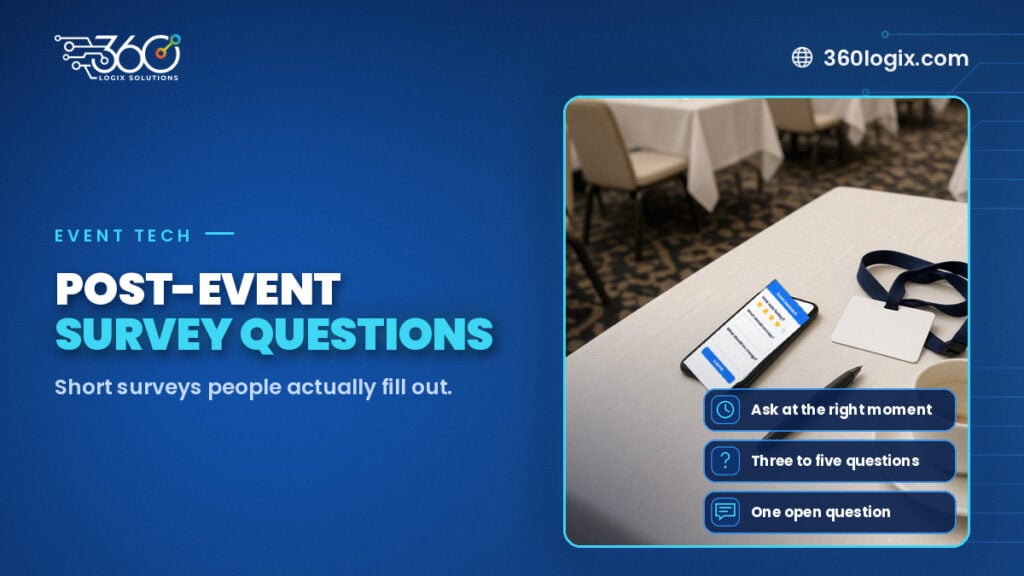
Post-Event Survey Questions: Collecting Attendee Feedback People Actually Fill Out
Three to five post-event survey questions, asked at the right moment, beat a 30-question form. Timing, a question bank, and how to raise response rates.
How Medical Associations Can Boost Post-Event Engagement
A 7/30/90-day post-event engagement plan for medical associations: fast certificates, recordings, member content, and support for PRC CPD documentation.
On-Site Badge Printing for Events: Speed, Look and What to Prepare
On site badge printing for events: pre-print for speakers and VIPs, print on demand for delegates, clean your data first, and test printers the day before.